Pico Laser for Facial Pigmentation, Acne Marks, Sun Spots, and Uneven Skin Tone
What picosecond laser technology may address, why pigment assessment matters, and how to protect recovery.
By ESCLARE Editorial Team
Key takeaways
- Picosecond devices deliver extremely short pulses that interact with selected pigment targets.
- Acne marks are not the same as active acne, and melasma requires especially careful assessment.
- Sun protection and conservative settings matter because post-inflammatory pigmentation can occur.
What Pico laser technology means
Pico refers to pulse duration measured in picoseconds. Short pulses can create photoacoustic effects that fragment selected pigment while limiting prolonged heat delivery. The wavelength, handpiece, fluence, and treatment mode still determine what the device actually does.
Pigmentation concerns are not all the same
Sun spots, post-acne marks, melasma, freckles, and deeper pigment patterns can look similar but behave differently. Active acne needs its own plan, while a flat dark mark left after acne may be approached as post-inflammatory pigmentation.
Melasma can recur or worsen with heat, light, hormones, and irritation. Laser is not automatically the first or only option, so professional assessment and consistent sun protection are central to planning.
What to expect
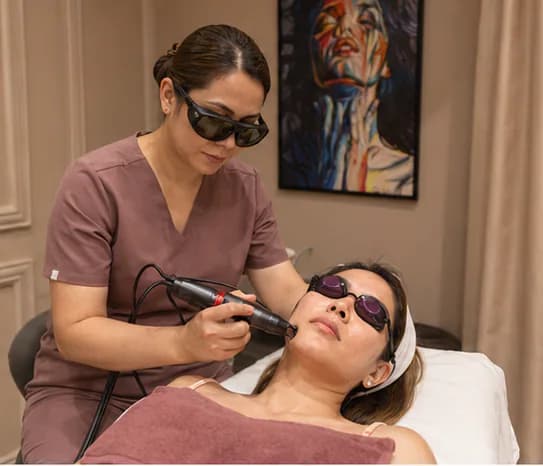
After cleansing and assessment, protective eyewear is applied and the provider treats the selected area with settings chosen for the concern and skin response. Temporary warmth, redness, mild swelling, darkening of spots, or sensitivity may occur. Downtime depends on the treatment mode and intensity.
Pre Care
- Limit tanning and disclose recent sun exposure, peels, lasers, retinoids, and photosensitizing medicines.
- Arrive with clean skin and follow any instruction to pause irritating active ingredients.
- Tell the clinic about cold sores, keloid tendency, pregnancy, active infection, or prior pigment changes.
Aftercare
- Use gentle cleanser, moisturizer, and broad-spectrum sunscreen as directed.
- Avoid picking flaking or darkened spots and pause harsh actives until cleared.
- Reduce unnecessary heat and direct sun during early recovery.
Who may not be suitable
Suitability depends on individual assessment. Treatment may be delayed, modified, or replaced when any of the following applies:
- Active infection, open lesions, or inflamed acne in the planned area
- Recent tanning or uncontrolled photosensitivity
- Pregnancy or medical factors needing clinician clearance
When to contact the clinic
Contact ESCLARE promptly for an unexpected or worsening reaction, including:
- Blistering
- Increasing swelling
- Severe pain
- Spreading rash or discharge
Frequently asked questions
Can Pico laser cure melasma?
No treatment should be presented as a melasma cure. Melasma often needs long-term trigger control, sun protection, skincare, and carefully selected procedures.
Can Pico laser treat active acne?
Active acne and leftover marks are different concerns. The provider should assess inflammation first and may recommend another acne-focused plan.
Will my spots become darker first?
Temporary darkening or a peppered appearance can occur with some pigment treatments. Follow aftercare and contact the clinic if the reaction is severe or worsening.
Is a consultation required?
Yes. A consultation helps the clinic review your goals, skin or health history, current medicines, and whether another approach may be safer or more appropriate.
Are results guaranteed?
No. Response varies with the concern, treatment plan, health factors, consistency, and aftercare. ESCLARE should confirm realistic expectations during assessment.