4D Wavelength Diode Laser Hair Removal: How It Works, Benefits, Sessions, and Aftercare
A practical guide to diode laser hair reduction, treatment areas, session planning, comfort, and aftercare.
By ESCLARE Editorial Team
Key takeaways
- Diode systems target pigment associated with the hair follicle to support gradual hair reduction.
- Hair grows in cycles, so a planned series is commonly needed.
- Skin tone, hair color, recent tanning, medicines, and treatment area affect suitability and settings.
How diode laser hair reduction works
A diode laser delivers controlled light energy toward pigment in the hair shaft and follicle. The goal is to heat the follicle enough to reduce future growth while protecting the surrounding skin with appropriate settings and cooling.
Unlike shaving, which cuts hair at the surface, or waxing, which pulls hair from the follicle, laser treatment aims to reduce regrowth over time. IPL uses broad-spectrum light; a diode device uses selected laser wavelengths. Neither approach should be chosen without assessing skin tone, hair color, and medical history.
Why treatment intervals and the hair-growth cycle matter
Laser hair removal works most effectively when individual hairs are in the appropriate active growth stage. Because hairs enter these stages at different times, sessions need to be appropriately spaced rather than repeated at very short intervals in an attempt to speed results.
Anagen is the active growth phase. Hair is most responsive during this stage because the growing hair provides an effective pathway for laser energy toward the follicle. Catagen is the transitional phase, when growth slows and the follicle begins moving away from active growth. Telogen is the resting and shedding phase, when hair is not actively growing in the same way as it is during anagen.
All hairs are not synchronized in one stage at the same time. A series of appropriately timed treatments is therefore needed to progressively target different hairs as they enter a responsive growth stage.
- Intervals depend on the body area and observed regrowth.
- Coarse, dark hair often responds differently from fine or light-colored hair.
- Hormonal factors can influence facial and body-hair regrowth.
- Maintenance may be discussed after the initial course.
What to expect during the appointment
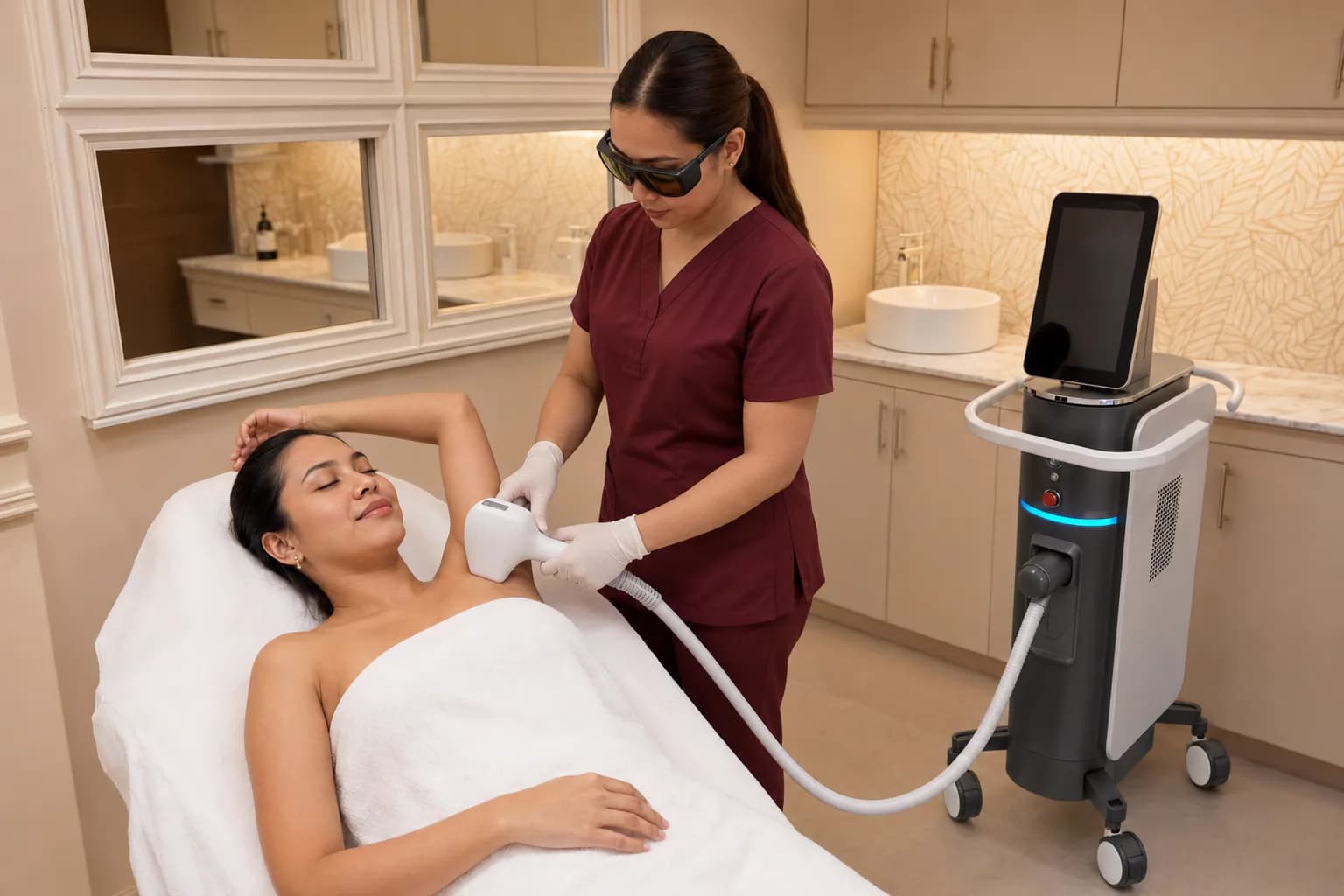
The team reviews the treatment area, recent sun exposure, medicines, skin sensitivity, and prior reactions. The area is prepared, protective eyewear is used, and the handpiece is applied in a planned pattern. Clients often describe warmth or a brief snapping sensation, but comfort varies.
Pre Care
- Avoid waxing, plucking, or threading the treatment area before the session because the follicle must remain present.
- Follow the clinic's shaving timing and arrive with clean skin unless told otherwise.
- Disclose tanning, photosensitizing medicines, active irritation, pregnancy, and recent procedures.
Aftercare
- Use gentle cleansing and avoid heavy friction, heat, and irritating actives while the area feels sensitive.
- Use sun protection on exposed areas and follow the clinic's area-specific instructions.
- Do not scratch, pick, or treat temporary redness aggressively.
Who may not be suitable
Suitability depends on individual assessment. Treatment may be delayed, modified, or replaced when any of the following applies:
- Active infection, open wounds, significant irritation, or a fresh tan in the treatment area
- Pregnancy, or a medicine/health history that requires clearance
- Hair color or density unlikely to respond well to the selected device
When to contact the clinic
Contact ESCLARE promptly for an unexpected or worsening reaction, including:
- Blistering
- Severe or increasing pain
- Marked swelling
- Signs of infection
Frequently asked questions
Does diode laser remove hair permanently?
It is more accurate to describe the service as long-term hair reduction. Regrowth, hormones, treatment area, and maintenance needs vary.
Is diode laser suitable for morena skin?
It may be suitable when the device, settings, cooling, and operator experience are appropriate. A skin assessment and careful test approach may be recommended.
Can I wax between sessions?
Waxing or plucking can interfere with the follicle target. Ask the clinic which temporary hair-removal methods are acceptable between visits.
Is a consultation required?
Yes. A consultation helps the clinic review your goals, skin or health history, current medicines, and whether another approach may be safer or more appropriate.
Are results guaranteed?
No. Response varies with the concern, treatment plan, health factors, consistency, and aftercare. ESCLARE should confirm realistic expectations during assessment.